

The 4-point SPARE Act compliance checklist
California’s SPARE Act (AB 747) takes effect January 1, 2027. To be ready, your firm needs to do four things: apply the new rules to every server, meet the three-attempt diligence standard, document each attempt with a photo and GPS data, and review every proof of service before you file it. This SPARE Act compliance checklist from One Legal walks through each step.
Governor Newsom signed the Service of Process Accountability, Reform and Equity (SPARE) Act on October 10, 2025. It tightens the documentation and diligence rules behind civil service of process to cut down on “sewer service,” where someone falsely claims they completed service.
New to the law? Start with our plain-English guide, What Is the SPARE Act?
RELATED: Download the printable checklist (PDF)
1. Who has to follow AB 747’s service rules?
Everyone who serves papers, whether they’re a registered process server or not. AB 747’s diligence and documentation duties attach to the service itself, not to the server’s registration status. The same rules apply whether a registered process server or a friend or family member completes service.
Starting January 1, 2027, county process server registries also become uniformly public statewide. For more on who must register and what’s changing, see Who Must Comply with AB 747?
- Confirm every person serving papers for your firm follows the new standards
2. What counts as “reasonable diligence” under AB 747?
Three service attempts, on three different days, at three different times. AB 747 writes this definition into CCP 415.20(b), the rule for substituted service on an individual. Before, what counted as reasonable diligence varied case by case. In consumer debt and unlawful detainer cases, at least one of those attempts must be made at the defendant’s home, if the address is known or can be found with reasonable effort.
Some counties’ local rules currently go beyond the statewide standard. However, the new statute should take precedence, though courts may take time to adjust. For now, working with a process server who knows each county’s rules helps you meet both and avoid service defects.
- Confirm your servers make three attempts on separate days and at varied times before substituted service
- In consumer debt and unlawful detainer cases, confirm at least one attempt is made at the defendant’s home
- Check local rules in every county where you serve
3. What documentation does AB 747 require for each attempt?
A photo with a readable date, time, and GPS stamp. Each completed or attempted service generally needs a photo of the door or entrance, or of the site of service for public locations.
First, the server should take the photo as close as possible to the time of the attempt. If there’s no signal, the server still takes the photo and gives a detailed statement explaining why the GPS data is missing. If taking a photo would compromise the server’s safety, the server can skip it but must give a detailed statement explaining why on the proof of service.
- Confirm any missing photo or GPS data is explained in a detailed statement on the proof of service
- Confirm exceptions are explained in writing on the return
4. How should you review a proof of service before filing?
Check the form, then the evidence. Make sure your team is using the correct, current Judicial Council form for the case type. New SPARE Act-compliant forms, including revised proofs of service and a new declaration of diligence (POS-012) are expected before the January 1, 2027 effective date. Then confirm the photos, GPS data, and diligence details are complete before anyone files anything.
One Legal’s process servers already capture time-stamped, GPS-tagged photos on service attempts, so your proofs are built for AB 747 from the start.
- Switch to the updated Judicial Council proof of service forms once released
- Review photos, GPS data, and attempt details on every proof before filing
Why AB 747 compliance matters
Incomplete or noncompliant service records give defendants a clearer path to a motion to vacate or set aside a default judgment. Under AB 747, a defendant who says they weren’t properly served can’t be denied a hearing, and the party that obtained the default must prove service was proper. A complete record of photos, GPS data, and diligence details is the strongest way to meet that burden and avoid a costly do-over, or losing ground on the case itself.
Read more about AB 747
Want a service of process partner already building for AB 747?
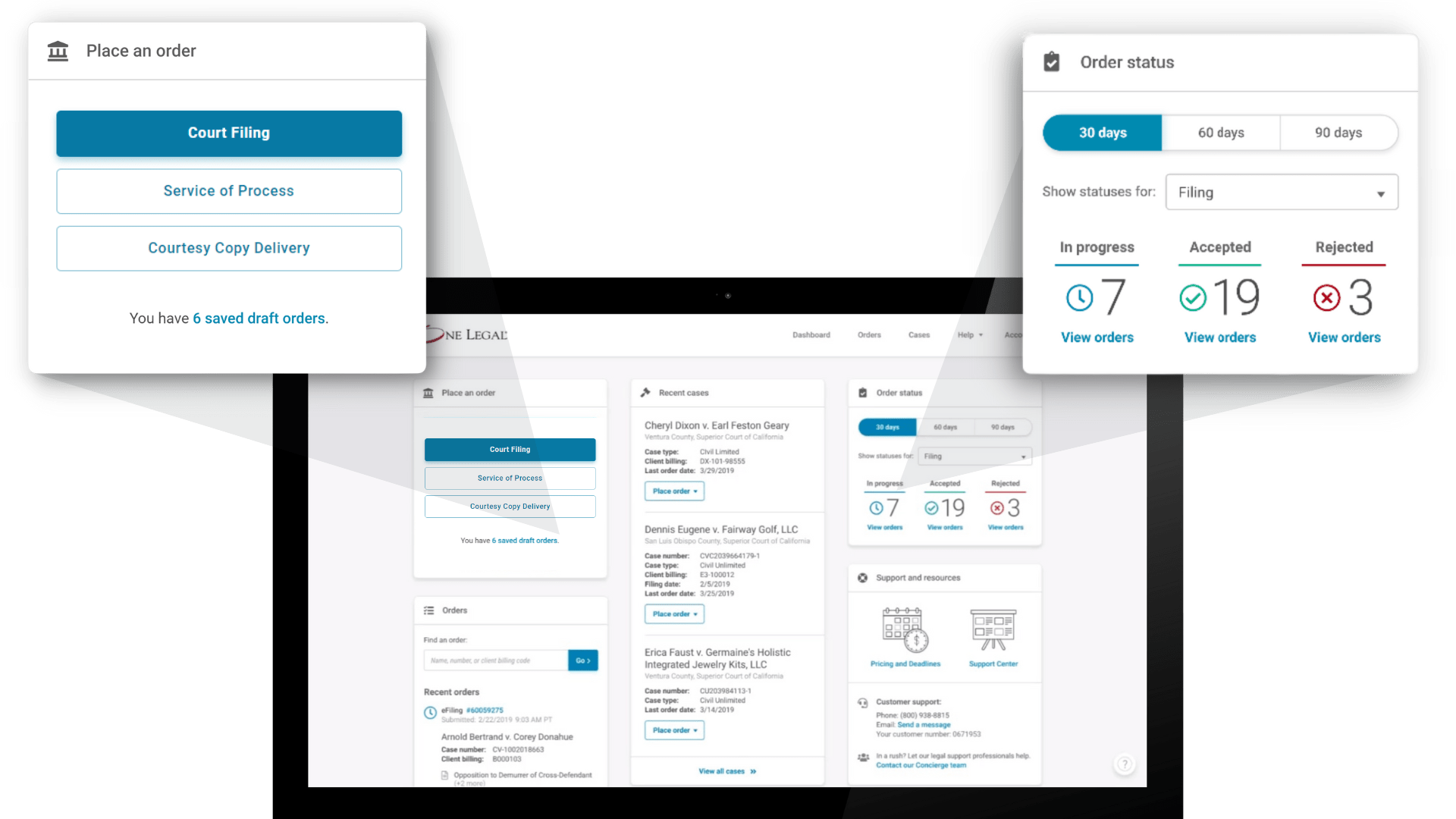
One Legal handles eFiling, service of process, and courtesy copy delivery across all 58 California counties and nationwide. Talk to our team
Disclaimer: This checklist is for general informational purposes only and is not legal advice. Consult counsel about your firm’s specific compliance obligations under AB 747.
SPARE Act compliance checklist FAQs
When does the SPARE Act take effect?
Most provisions of AB 747 take effect January 1, 2027. The bill was signed on October 10, 2025.
How many attempts are required before substituted service in California?
Under AB 747, reasonable diligence for substituted service on an individual means three attempts, on three different days, at three different times, as codified in CCP 415.20(b). In consumer debt and unlawful detainer cases, at least one attempt must be made at the defendant’s home, if it’s known or can be found with reasonable effort.
Does AB 747 require photos of service attempts?
Yes. Each completed or attempted service generally needs a photo of the door, entrance, or site of service with a readable date, time, and GPS stamp. If there’s no signal, the server still takes the photo and explains the missing GPS data. If a photo would compromise the server’s safety, it can be omitted with a detailed written explanation on the proof of service.
Does the SPARE Act apply to people who aren’t registered process servers?
Yes. AB 747’s diligence and documentation duties attach to the service itself, so they apply whether a registered process server or a friend or family member completes service.
What happens if service doesn’t comply with AB 747?
Defendants have a clearer path to a motion to vacate or set aside a default judgment. They can’t be denied a hearing, and the party that obtained the default must prove service was proper.
How can One Legal help with AB 747 compliance?
One Legal’s service of process and order bundling options will include AB 747 quality assurance, and its process serving covers all 58 California counties, as well as nationwide and international serves.